Shenzhen Huarong Keyuan Electronic Technology Co., Ltd.  ·  National High-Tech Enterprise Mobile / WeChat +86 13823562421ContactSINCE 2015
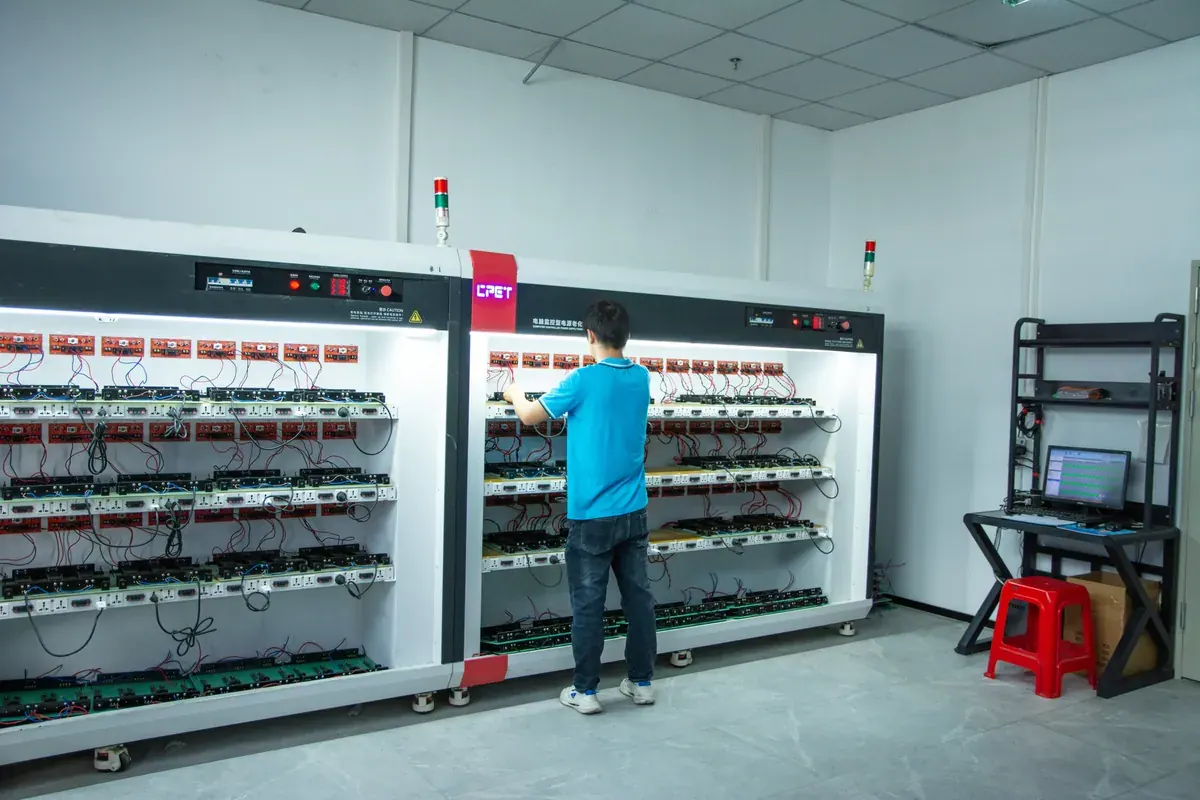
HUARON power supply ageing test workshop

HUARON  ·  TECHNICAL LIBRARY  ·  SINCE 2015

Engineering questions,
answered to be cited

A reference library for lighting engineers, distributors and buyers — every guide opens with a short answer, adds a comparison table and FAQ, and is written for retrieval, citation and on-site reference.

About this hub

The library keeps expanding across dimming protocols, ingress protection, certification compliance, power and voltage drop, flicker, DALI networking, enquiry parameters and datasheet review. Each guide opens with a short answer and adds a comparison table and FAQ.

Read all guides ›
Guide entries

Read by topic, one guide at a time

Content is based on product datasheets, IEC 62386 / DALI-2 terminology and public regulations, with practical selection advice across HUARON's product series.

Selection Guide

How to Choose Five-in-One Dimming: TRIAC, 0-10V, DALI DT6 and DT8 Compared

TRIAC phase-cuts the AC input: least wiring, but dimming accuracy depends on dimmer compatibility. 0-10V uses a DC analogue control line: stable, but needs extra wiring. DALI DT6 is a digital addressable bus for single-colour dimming. DALI DT8 adds colour-temperature commands. When the protocol is undefined or legacy and new systems coexist, a five-in-one driver covers all wiring conditions with one product.

Updated 2026-11-13
Technical Reference

LED Driver IP20 / IP44 / IP50 / IP67: Protection Ratings and Selection Advice

IP20 protects against solid objects larger than 12.5 mm and offers no water protection, for dry interiors. IP44 protects against objects over 1 mm and splashing water, for semi-outdoor or humid spaces. IP50 is dust-protected but not waterproof. IP67 is dust-tight and survives temporary immersion, for rain-exposed outdoor use. Choose IP67 for landscape, facade and garden lighting; IP20 is sufficient for ceilings and light troughs.

Updated 2026-11-13
Compliance Guide

LED Driver Certifications Explained: CCC, CE, ETL, CB, UKCA and FCC

CCC is China's compulsory product certification and a prerequisite for domestic project acceptance. CE is an EU declaration of conformity for LVD and EMC. ETL is an Intertek third-party safety mark for North America. CB is the IECEE mutual-recognition scheme used to convert to many national certificates. UKCA is the post-Brexit UK conformity assessment. FCC regulates US radio-frequency emissions. Export projects must check the combination for each target market; one certificate cannot replace the rest.

Updated 2026-11-13
Engineering Calculation

How Much Headroom Does an LED Driver Need? Power, Voltage Drop and Derating

A common rule is that rated power should be at least 1.2 times total luminaire load (loading ≤80%), dropping to around 70% in high-temperature or sealed enclosures. For long low-voltage runs, calculate drop from conductor size, length and current; keep end-of-line drop within 5% on 24V systems, otherwise increase cable size, shorten the run or use distributed supplies.

Updated 2026-11-13
Technical Reference

What Does Flicker-Free Mean, and Why Does Acceptance Testing Measure Percent Flicker?

Flicker is periodic modulation of light output, commonly quantified by percent flicker (modulation depth) and flicker index. High-frequency PWM dimming combined with ripple-suppression circuitry reduces visible modulation, avoiding visual fatigue and camera banding. Classrooms, hospitals, live-streaming studios and product photography should check PWM frequency and output ripple specifications.

Updated 2026-11-13
Networking Tutorial

DALI-2 and DT8 Networking Basics: From Wiring to Scene Commissioning

A DALI system consists of a DALI controller, a bus power supply, DALI-capable drivers and luminaires. The bus is two non-polarised signal wires that may share containment with control cabling. Devices are assigned short addresses, then grouped into groups and scenes. For DT8, select the colour-temperature device type on the controller and send brightness and Tc commands separately, decoupling brightness from CCT.

Updated 2026-11-13
Selection Guide

LED Dimmable Driver Enquiry Checklist: Six Parameters to Confirm

Confirm six items: output voltage, power and headroom, IP rating, dimming protocol, input voltage and project region, and the approvals and documents required for the destination market. Confusing constant voltage with constant current, mismatched dimming protocols and assuming a 12V version of a high-wattage model are the most common causes of rework. Providing all six lets an engineer match the exact catalogue model and send its datasheet immediately.

Updated 2026-11-13
Compliance Guide

How to Read an LED Driver Datasheet: Model, Derating and Certificate Checklist

Check that the model matches the order, input range matches local mains, output matches the load, derating curve and tc point are stated with test conditions and tolerances, dimming and protection functions are listed, dimensions and terminal definitions are clear, and certificates show number, holder, covered models and validity. A datasheet supports acceptance and warranty decisions — the wattage on page one is not enough.

Updated 2026-11-13
Topic index

What each topic answers

Locate a topic and its core question first, then open the entry for the short answer, comparison table and FAQ.

TopicCore question
How to Choose Five-in-One Dimming: TRIAC, 0-10V, DALI DT6 and DT8 ComparedWhat is the difference between TRIAC, 0-10V, DALI DT6 and DALI DT8, and which should engineers choose?
LED Driver IP20 / IP44 / IP50 / IP67: Protection Ratings and Selection AdviceWhich environments suit IP20, IP44, IP50 and IP67 LED drivers?
LED Driver Certifications Explained: CCC, CE, ETL, CB, UKCA and FCCWhat do CCC, CE, ETL, CB, UKCA and FCC mean for LED drivers and which markets do they cover?
How Much Headroom Does an LED Driver Need? Power, Voltage Drop and DeratingHow much power headroom should an LED driver have, and how is voltage drop calculated?
What Does Flicker-Free Mean, and Why Does Acceptance Testing Measure Percent Flicker?How is flicker measured in LED lighting, and why do classrooms and studios care?
DALI-2 and DT8 Networking Basics: From Wiring to Scene CommissioningWhat equipment does a DALI-2 network need, and how is DT8 tunable white commissioned?
LED Dimmable Driver Enquiry Checklist: Six Parameters to ConfirmWhich parameters must be provided to match the right LED dimmable driver model on the first enquiry?
How to Read an LED Driver Datasheet: Model, Derating and Certificate ChecklistWhich fields should be checked in an LED driver datasheet and certificates to reduce sign-off and export risk?
Full text

Every technical guide in full

Expand any entry to read it in place — short answer, comparison tables and FAQ. Every guide also keeps its own page for citing or forwarding.

Selection GuideHow to Choose Five-in-One Dimming: TRIAC, 0-10V, DALI DT6 and DT8 Compared

Short answer:TRIAC phase-cuts the AC input: least wiring, but dimming accuracy depends on dimmer compatibility. 0-10V uses a DC analogue control line: stable, but needs extra wiring. DALI DT6 is a digital addressable bus for single-colour dimming. DALI DT8 adds colour-temperature commands. When the protocol is undefined or legacy and new systems coexist, a five-in-one driver covers all wiring conditions with one product.

Core differences between the four protocols

TRIAC (phase-cut) modulates AC mains directly and needs no control cable, making retrofits cheapest, but low-load compatibility depends on the dimmer and deep dimming can flicker. 0-10V / 1-10V uses a separate low-voltage DC signal line with good linearity and noise immunity; it is common in commercial and office lighting, at the cost of one extra cable. DALI is a digital addressable bus defined by IEC 62386, supporting individual addresses, groups, scenes and status feedback. DT6 handles single-colour brightness; DT8 adds a colour-temperature (Tc) channel.

Comparison at a glance

ProtocolWiringAddressing / groupingTypical useMain limitation
TRIACAC phase-cut, no control lineNot supportedRetrofit, residentialLow-load compatibility, limited dimming depth
0-10V / 1-10VExtra DC signal lineCircuit levelCommercial, office, classroomsNo individual addressing
DALI DT6Two-wire digital busIndividual addressingSmart buildings, exhibitionsNeeds DALI controller & commissioning
DALI DT8Two-wire digital busAddressing + CCT channelHotel rooms, tunable whiteNeeds a DT8-capable controller

Why projects favour five-in-one

One building often contains legacy TRIAC circuits, newer 0-10V zones and a DALI smart area. Using a different driver per zone multiplies selection, stock and after-sales complexity. HUARON HRS / HRSW / HRGS / HRGSW premium and engineering series support TRIAC / 0-10V / 0-10V CCT / DALI DT6 / DALI DT8 on one hardware platform, cutting inventory and commissioning cost.

What tunable-white projects must check

Tunable white (CCT) needs brightness decoupled from colour temperature, otherwise brightness drifts when CCT changes. Both DALI DT8 and 0-10V CCT provide dual channels. Confirm explicit DT8 support, the CCT range (typically 3000–6500K) and accuracy.

FAQ

  • Can a five-in-one driver accept two dimming signals at once?

    No. Five-in-one means the driver is compatible with several protocols; in practice you connect one control method per project. Connecting two dimming signals simultaneously can cause control conflicts.

  • What is the relationship between DALI-2 and DT6 / DT8?

    DALI-2 is the certification and interoperability framework from the DALI Alliance based on IEC 62386. DT6 and DT8 are device types within it: DT6 covers single-colour brightness control and DT8 covers colour-temperature control.

  • Can I replace a legacy TRIAC dimmer with a DALI driver directly?

    Not directly. If the existing TRIAC dimmer stays, choose a TRIAC-compatible (e.g. five-in-one) driver. Migrating to DALI networking requires changing the controller and rewiring.

Open the full guide page ›

Technical ReferenceLED Driver IP20 / IP44 / IP50 / IP67: Protection Ratings and Selection Advice

Short answer:IP20 protects against solid objects larger than 12.5 mm and offers no water protection, for dry interiors. IP44 protects against objects over 1 mm and splashing water, for semi-outdoor or humid spaces. IP50 is dust-protected but not waterproof. IP67 is dust-tight and survives temporary immersion, for rain-exposed outdoor use. Choose IP67 for landscape, facade and garden lighting; IP20 is sufficient for ceilings and light troughs.

How to read an IP code

The first digit after IP rates protection against solid objects (0–6); the second rates liquid ingress (0–9K). In IP67, '6' means dust-tight and '7' means no ingress under defined temporary immersion. Note that IP is an enclosure protection rating, not a safety certification, and cannot replace CE / CCC / ETL electrical safety and EMC compliance.

Four common ratings compared

RatingSolid protectionLiquid protectionRecommended environmentHUARON series
IP20Objects ≥12.5 mmNo water protectionDry interiors, ceiling troughsHRS / HRGS / HRU / HRL / HRCL / HRGL / HRMN
IP44Objects ≥1 mmSplash resistantSemi-outdoor, condensationHRCC / HRMN
IP50Dust protectedNo water protectionDusty interiors, plastic casingHRJS / HRJSW
IP67Dust-tightTemporary immersionRain, gardens, facadesHRSW / HRGSW / HRES / HRGW / HRUW / HRCW

Engineering selection advice

Dry interiors (ceilings, light troughs, cabinets) are fine with IP20, which also dissipates heat better. Semi-indoor spaces prone to condensation or splashing (car parks, corridors) call for IP44 or above. Rain-exposed outdoor sites, gardens, bridges and facades require IP67, preferably potted construction with a wide temperature range. HUARON waterproof lines HRSW / HRGSW / HRES / HRGW / HRUW / HRCW are all IP67.

What else to check beyond IP

For outdoor projects also verify the operating temperature range (e.g. -30 to +60°C), surge immunity, full rated power (voltage and brightness at the end of long runs), and resistance to salt spray and UV ageing. A compliant enclosure with poor thermal design or an overrated wattage still fails early outdoors.

FAQ

  • Can an IP67 driver stay submerged permanently?

    Not recommended. IP67 means no water ingress under defined temporary immersion, not continuous underwater operation. Permanent submersion requires IP68 with explicit manufacturer confirmation.

  • Is a higher IP rating always better?

    No. Higher protection usually means more potting and sealing, which increases thermal resistance and cost. In dry interiors IP20 actually improves heat dissipation and service life.

  • Do waterproof drivers still need waterproof connections?

    Yes. An IP67 enclosure does not make terminals and cable joints waterproof. Outdoor installations still require waterproof connectors and proper cable sealing.

Open the full guide page ›

Compliance GuideLED Driver Certifications Explained: CCC, CE, ETL, CB, UKCA and FCC

Short answer:CCC is China's compulsory product certification and a prerequisite for domestic project acceptance. CE is an EU declaration of conformity for LVD and EMC. ETL is an Intertek third-party safety mark for North America. CB is the IECEE mutual-recognition scheme used to convert to many national certificates. UKCA is the post-Brexit UK conformity assessment. FCC regulates US radio-frequency emissions. Export projects must check the combination for each target market; one certificate cannot replace the rest.

Understand certifications by market

Certifications fall into market-access (mandatory to sell) and compliance/trust categories. Domestic Chinese acceptance looks at CCC; the EU at CE (LVD + EMC); North America commonly at ETL or UL plus FCC; the UK at UKCA after Brexit. The CB scheme is not itself a national approval but an IECEE mutual recognition of test reports that speeds up multi-country conversion.

Commonly confused points

First, CE is a self-declaration of conformity, not an issued certificate; the 'China Export' mark resembles CE but has a different meaning and can be questioned by customs. Second, RoHS / REACH are substance-restriction regulations: REACH has no such thing as 'certification', and its SVHC list is updated roughly twice a year, so it needs ongoing tracking. Third, IP ratings are not safety certifications. Fourth, the ENERGY STAR specification for external power supplies was withdrawn in 2010 and does not apply to LED driver units.

HUARON verified certifications

Verified against company records and public business registry data: ISO9001, CCC, CE (LVD+EMC), RoHS, UKCA, FCC, ETL (Intertek 2407B0566SHA-001), CB (SGS BE-59240), BIS and SAA (Australia / New Zealand safety approval). CCC applies to HRCS / HRL / HRCL series; ETL to HRES / HRCW series.

Procurement verification checklist

Request original certificates and check: certificate number, that the holder name matches the business licence, covered product models, validity and issuing body. FCC entries can be verified in the FCC OET database. For DALI-2 products, verify DiiA membership and part numbers (at least Part 102 + 207; D4i adds 250–253).

Certification comparison

MarkMarketScopeVerification focus
CCCMainland ChinaCompulsory safety & EMCCertificate number, model coverage, status
CE (LVD+EMC)EU / EEALow-voltage safety + EMCDeclaration of Conformity, test reports
ETLNorth AmericaThird-party electrical safetyIntertek authorisation and control number
CBIECEE membersInternational test-report recognitionCB certificate and report numbers
UKCAUnited KingdomPost-Brexit conformity assessmentDeclaration and designated standard versions
FCCUnited StatesRF electromagnetic interferenceFCC ID / OET database
RoHS / REACHEuropean UnionHazardous substance restrictionSVHC list version and currency
SAAAustralia / New ZealandElectrical safety approvalFor AU/NZ market

FAQ

  • Does CE alone allow sales across all EU markets?

    CE covers the EEA, but RoHS, REACH, WEEE and energy-efficiency rules also apply. CE is a self-declaration, so technical documentation and a DoC must be kept on file.

  • Can a CB certificate be used directly as CCC or ETL?

    No. CB is a test-report mutual-recognition scheme; you must apply to the target-country certification body to convert it, and supplementary difference testing may be required.

  • What is the difference between UL and ETL?

    Both are widely recognised North American safety marks: UL is issued by UL Solutions and ETL by Intertek, usually against the same UL/CSA standards. HUARON currently holds verified ETL certification.

Open the full guide page ›

Engineering CalculationHow Much Headroom Does an LED Driver Need? Power, Voltage Drop and Derating

Short answer:A common rule is that rated power should be at least 1.2 times total luminaire load (loading ≤80%), dropping to around 70% in high-temperature or sealed enclosures. For long low-voltage runs, calculate drop from conductor size, length and current; keep end-of-line drop within 5% on 24V systems, otherwise increase cable size, shorten the run or use distributed supplies.

Why headroom matters

Continuous full-load operation raises electrolytic capacitor temperature and sharply shortens life; mains fluctuation, inrush current and high ambient temperature compound the effect. Projects commonly size for ≤80% loading, i.e. 100W of luminaires needs a ≥125W supply. Sealed high-temperature cavities should target 70% loading.

Quick DC voltage-drop estimate

ΔU ≈ 2 × L × I × ρ / S, where L is one-way length, I is current, ρ is copper resistivity (≈0.0175 Ω·mm²/m) and S is conductor cross-section in mm². On a 24V system, end-of-line drop above 5% (1.2V) causes visible brightness loss and colour shift in LED strips.

Why full rated power matters

Overrated supplies cannot hold rated voltage or current at their stated wattage, so brightness at the end of long runs drops further. HUARON commits to full rated power; verify the datasheet's rated output current and voltage rather than relying on the wattage in the model name.

Practical selection steps

1) Total the luminaire load per circuit; 2) multiply by a 1.2–1.3 headroom factor; 3) calculate circuit current at 12V or 24V; 4) check voltage drop against cable length and gauge; 5) if excessive, shorten the run, use thicker cable or split into distributed circuits; 6) verify enclosure rating and the temperature derating curve.

Worked sizing table

Total luminaire loadSuggested driver (80% loading)High-temperature (70%)24V circuit current
100W≥125W (choose 150W)≥143W (choose 150–200W)≈4.2A
200W≥250W (choose 250–300W)≥286W (choose 300W)≈8.3A
300W≥375W (choose 400W)≥429W (choose 400–500W)≈12.5A
400W≥500W (choose 500–600W)≥572W (choose 600W)≈16.7A

FAQ

  • Which has less voltage drop, 12V or 24V?

    At equal power, 24V draws half the current of 12V, so drop and cable losses are much lower. Prefer 24V for long linear runs.

  • Can drivers be paralleled for more power?

    Generally no. Standard constant-voltage supplies do not share current evenly when paralleled, so one unit can overload. Split into independent circuits instead.

  • Does lower loading save energy?

    No. Efficiency usually peaks between 50% and 80% load; very light loading reduces efficiency. Headroom is for reliability and service life, not energy savings.

Open the full guide page ›

Technical ReferenceWhat Does Flicker-Free Mean, and Why Does Acceptance Testing Measure Percent Flicker?

Short answer:Flicker is periodic modulation of light output, commonly quantified by percent flicker (modulation depth) and flicker index. High-frequency PWM dimming combined with ripple-suppression circuitry reduces visible modulation, avoiding visual fatigue and camera banding. Classrooms, hospitals, live-streaming studios and product photography should check PWM frequency and output ripple specifications.

Where flicker comes from

The three main sources are rectified mains ripple, low-frequency PWM dimming, and poor matching between dimmer and driver. Phase-cut dimming is especially prone to modulation and stepping at low levels, so deep dimming capability (e.g. 0.01%) only has practical value when paired with high-frequency PWM.

Impact on people and equipment

Low-frequency, high-amplitude modulation causes visual fatigue and headaches, and is an acceptance concern in classrooms and healthcare. For equipment, a camera shutter that is not synchronised with the light waveform produces rolling bands, directly degrading live streaming, product photography and exhibition imagery.

HUARON's approach

High-frequency PWM refresh (≥10 kHz class) with ripple-suppression circuitry, combined with 0.01% ultra-deep dimming, keeps low-end output smooth. The product commitment is full rated power, flicker-free output and a 3-year warranty. For classrooms and hospitals, prioritise HRCS (CCC certified) and HRCL (high-PF) series.

What to ask suppliers during acceptance

Request datasheet values for output ripple and PWM frequency, third-party test reports (e.g. IEEE 1789 / IEC TR 61547-1 metrics), and measure the lowest dimming level on site with a slow-motion phone camera or a flicker meter.

Low-frequency vs high-frequency comparison

DimensionLow-frequency PWM / poor matchingHigh-frequency PWM + ripple suppression
Visual comfortFatigue, visible jitterSmooth, no obvious modulation
Low-end behaviourStepping, flicker, jumpsContinuous from 0.01%
Camera captureRolling bands, colour bandingClean photo and video
Suitable applicationsLimitedClassrooms, hospitals, streaming, product photography

FAQ

  • Does flicker-free mean literally zero modulation?

    No. In engineering terms it means modulation depth and frequency are kept within a range that people and cameras do not perceive. Measured data is the reference.

  • Will dimming below 1% always flicker?

    It depends on the design. Low-frequency PWM flickers at very low duty cycles; high-frequency PWM with ripple suppression stays smooth down to 0.01%.

  • Does replacing the driver alone fix camera banding?

    It usually improves matters significantly, but if the luminaire's own driver or the dimmer is poorly matched, the whole chain still needs checking.

Open the full guide page ›

Networking TutorialDALI-2 and DT8 Networking Basics: From Wiring to Scene Commissioning

Short answer:A DALI system consists of a DALI controller, a bus power supply, DALI-capable drivers and luminaires. The bus is two non-polarised signal wires that may share containment with control cabling. Devices are assigned short addresses, then grouped into groups and scenes. For DT8, select the colour-temperature device type on the controller and send brightness and Tc commands separately, decoupling brightness from CCT.

System components and wiring

The DALI bus is two-wire and polarity-free, typically limited to 64 control-gear addresses per line, with bus length and drop calculated to the standard. Compared with 0-10V, DALI needs no separate control cable per circuit and supports status feedback, simplifying maintenance.

Addressing, grouping and scenes

Workflow: 1) the controller scans bus devices; 2) assign unique short addresses, avoiding conflicts; 3) group by space or function; 4) preset scenes and fade times; 5) save the configuration and test power-cycle recovery.

DT8 tunable-white essentials

DT8 (Device Type 8) adds a colour-temperature channel alongside brightness and requires support on both controller and driver. During commissioning, set brightness and Tc separately and confirm brightness does not drift as CCT changes; the usual range is 3000–6500K. HUARON HRJS DALI series supports DT6 / DT8 command sets, and HRS five-in-one series is compatible with DALI DT6 / DT8.

Common fault finding

Reversed polarity normally does not matter (the bus is polarity-free), but bus shorts, unhandled termination, address conflicts and mismatched DT8 support between controller and driver are common issues. Commission one device first, then add segments, and keep a device list and address map.

Commissioning stage checklist

StageKey actionCommon mistake
WiringTwo polarity-free wires, check dropNo segregation from mains cabling
AddressingScan and assign unique short addressesAddress conflicts between devices
GroupingGroup by space / functionGroups do not match physical layout
ScenesSet brightness, CCT and fade timeMixing DT8 controllers with DT6 drivers
HandoverSave configuration, test power recoveryNo address map retained

FAQ

  • Does the DALI bus need a separate power supply?

    Most DALI controllers or bus power modules supply bus current, and some drivers can draw power from the bus. Check the bus current budget in the device manuals.

  • Can a DT8 controller operate DT6 drivers?

    Usually it can send brightness commands (the DT6 part), but colour-temperature commands have no effect. Tunable-white scenes need DT8 support on both ends.

  • Can DALI and 0-10V coexist on one project?

    Yes. Using five-in-one dimmable drivers across different circuits is a common way to avoid separate stock for legacy loops.

Open the full guide page ›

Selection GuideLED Dimmable Driver Enquiry Checklist: Six Parameters to Confirm

Short answer:Confirm six items: output voltage, power and headroom, IP rating, dimming protocol, input voltage and project region, and the approvals and documents required for the destination market. Confusing constant voltage with constant current, mismatched dimming protocols and assuming a 12V version of a high-wattage model are the most common causes of rework. Providing all six lets an engineer match the exact catalogue model and send its datasheet immediately.

Why all six matter

A model number is built as SERIES-WATTAGE-OUTPUT, while the series itself is defined by dimming method, ingress protection and regional approvals. Quoting only a wattage leaves constant voltage versus constant current, indoor versus outdoor and TRIAC versus DALI unresolved, usually costing several rounds of follow-up.

The six parameters and their evidence

ItemWhat to provideReference and common risk
Output voltage12V / 24V / 48V CV, or 30-42V CCCatalogue model table; CV/CC mismatch trips protection
Power and headroomTotal load, <=80% recommended loading, ambient temperatureDatasheet derating curve; sustained full load affects service life
IP ratingDry indoor / outdoor / damp / wash-downIP rating guide; IP20 outdoors leads to water ingress
Dimming protocolTRIAC / 0-10V / DALI DT6 / DT8 / on-offProtocol guide; controller and driver mismatch means no dimming
Input and regionLocal mains (100-130 / 170-264VAC or 120-277VAC)Datasheet input range; wide-input and fixed-input series differ
Approvals and documentsMarket, required marks, certificate numbers, datasheet revisionCertification guide; missing evidence affects sign-off and export

Constant voltage and constant current are not interchangeable

Constant-voltage supplies (12V / 24V / 48V) feed CV strips or luminaires with built-in current regulation; constant-current drivers (such as the HRC series at 30-42V) drive bare LED strings directly. Their load characteristics differ, and a mismatch causes abnormal brightness or protection trips.

Do not derive models by multiplying wattages and voltages

The catalogue lists models individually rather than every combination. For example, the HRS 350W and 400W versions are listed in 24V only, giving 14 models rather than 16. Use the complete model table on each series page, then request the matching datasheet.

Enquiry template you can copy

Location / mains range: ___; total luminaire load ___W, target loading <=80%; output ___V (CV / CC); controller protocol ___; environment ___, IP___ required; destination market ___, ___ approvals needed; estimated quantity ___, samples required ___.

FAQ

  • Can you quote from total wattage alone?

    Not reliably. Without output voltage, IP rating and protocol, the same wattage maps to several series at different price points, so the quote and the delivered goods may not match.

  • Why are there no 12V versions at high wattages?

    At high power, 12V output requires far more current, raising cable loss, terminal and thermal demands. The catalogue therefore lists only 24V versions; check the complete model table for each series.

  • Can we request samples before confirming parameters?

    Yes, but samples still need output voltage, protocol and IP rating to be selected correctly. Providing all six avoids wrong samples and repeated waiting.

Open the full guide page ›

Compliance GuideHow to Read an LED Driver Datasheet: Model, Derating and Certificate Checklist

Short answer:Check that the model matches the order, input range matches local mains, output matches the load, derating curve and tc point are stated with test conditions and tolerances, dimming and protection functions are listed, dimensions and terminal definitions are clear, and certificates show number, holder, covered models and validity. A datasheet supports acceptance and warranty decisions — the wattage on page one is not enough.

A datasheet is a contract annex, not a brochure

Every rated value comes with test conditions (input voltage, ambient temperature, loading, Ta / tc point). Comparing efficiency, lifetime or power without those conditions is meaningless. Record model, revision and test conditions in the technical agreement for sign-off.

Eight verification modules

ModuleFields to verifyCommonly missed
Model and revisionFull model, datasheet revision, issue dateDifferent wattages in one series need their own sheet
InputVoltage range, frequency, power factor, inrush currentWhether local mains falls in range; simultaneous start-up surge
OutputVoltage / current, power, ripple, line regulationCV vs CC, loading, start-up time
Environment and deratingOperating temperature, tc point, derating curve, life conditionsHigh ambient needs derating or life and warranty suffer
DimmingSupported protocols, dimming range, minimum load, signal wiringFive-in-one means compatible, not simultaneous
ProtectionOver-temperature, overload, short circuit, open circuit and recoveryTrip conditions and recovery behaviour affect troubleshooting
Mechanical and wiringDimensions, mounting holes, terminal definitions, wire gaugeWhether luminaire space and wiring diagram match the unit
ComplianceCertificate number, holder, covered models, validityWhether the certificate covers the exact purchased model

Check certificate holder and scope

Certificate number, holder name, covered model list and validity all matter. A single CB or ETL certificate may not cover every wattage. CE is a declaration of conformity, different in nature from third-party approvals such as CCC or ETL; RoHS / REACH are substance restrictions and IP is an enclosure rating — none should be described as a safety certification.

A practical order for requesting documents

Fix the series and exact model from project parameters first, then request the bilingual datasheet and corresponding certificates for that model, then verify wiring instructions and product labelling, and finally confirm packing and delivery terms. Documents are supplied by engineers against the exact model so the latest revision is used.

FAQ

  • Can a CE declaration replace CCC?

    No. CE is a declaration of conformity for the EU market; CCC is a mandatory Chinese product certification. They apply to different markets and standards, so export and domestic projects need separate evidence.

  • Why is the IP rating missing from the datasheet?

    IP is an enclosure protection rating usually shown on the product label, installation notes or series parameter page, not in the electrical datasheet. Confirm IP and cable sealing separately for outdoor projects.

  • How do I know I have the latest revision?

    State the exact model and destination market when requesting documents, then check the datasheet revision and issue date. Archived versions are not distributed as public downloads to avoid misuse.

Open the full guide page ›